Preface
Informal employment is extensive, currently comprising more than half of the global workforce. Workers
in the informal economy often face significant decent work deficits, including the denial of rights at
work, insufficient opportunities for quality employment, inadequate social protection and the absence of
social dialogue. To address these challenges, informal economy workers increasingly rely on cooperatives
and other social and solidarity economy (SSE) entities. These entities aim to enhance employment
opportunities and livelihoods, promote democratic governance in the workplace and foster solidarity and
social dialogue. The contribution of cooperatives and other SSE entities to the transition from the informal
to the formal economy is acknowledged in the International Labour Organization’s (ILO) Transition from
the Informal to the Formal Economy Recommendation, 2015 (No. 204) and its resolution concerning
decent work and the social and solidarity economy, 2022.
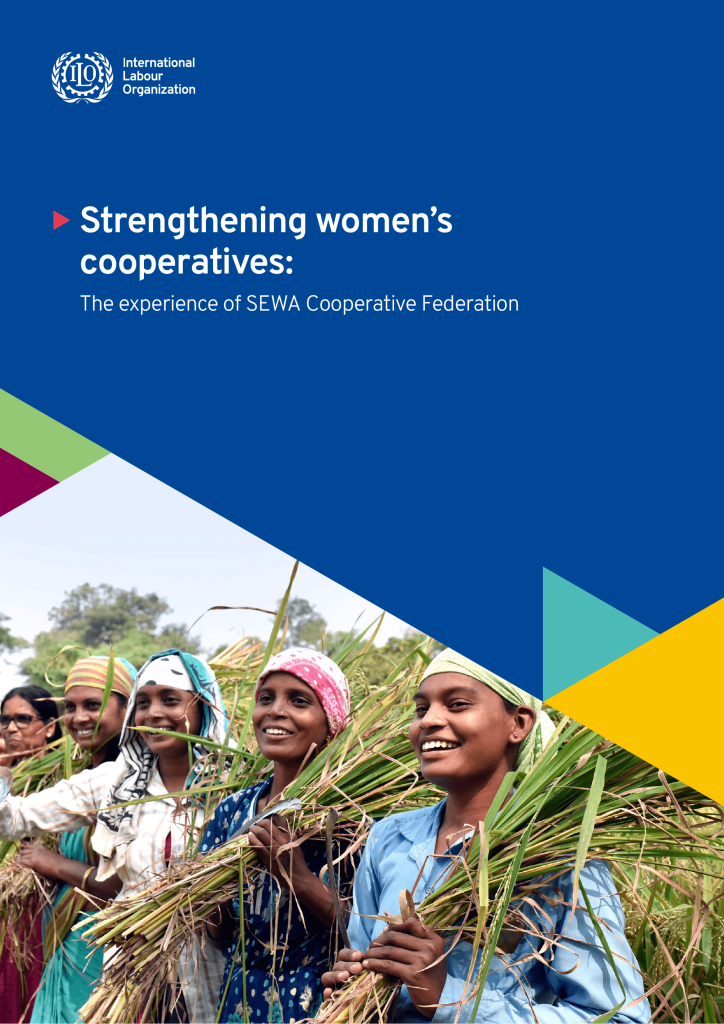
The Gujarat State Women’s SEWA Cooperative Federation in India is a notable initiative that has inspired
similar efforts around the world. SEWA, or the Self-Employed Women’s Association, has adopted a dual
strategy: organizing poor women workers in the informal economy in a union and promoting womenowned cooperatives to empower them. These cooperatives offer improved employment and income
generation opportunities, along with a range of services such as financial, insurance and social security
services, as well as business and leadership training. Recently, the ILO has received requests from its
constituents to better understand SEWA’s approach for potential adaptation and replication in Asia and
beyond.