This work builds on a longer tradition within the SEWA ecosystem, where collective action and advocacy have contributed to policy shifts affecting informal workers. For example, SEWA’s engagement alongside networks such as the National Association of Street Vendors helped shape national legislation on street vending, creating a legal framework for workers who were previously unrecognised.
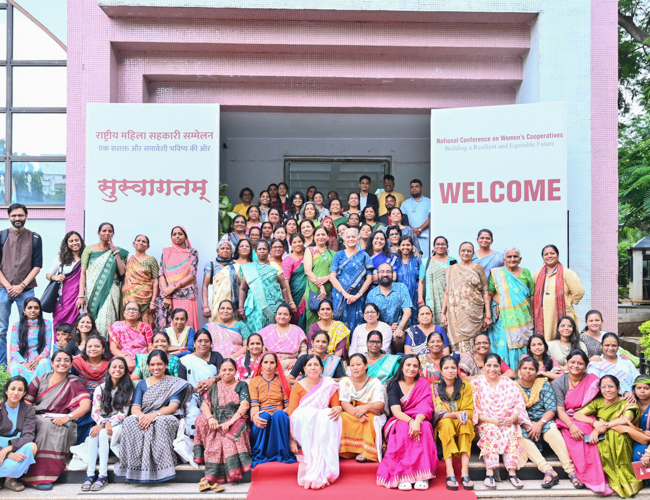
More recently, SCF co-organised the National Conference on Women’s Cooperatives 2025 with VAMNICOM, bringing together grassroots leaders, policymakers, and sector experts to produce actionable recommendations on access to finance, compliance requirements, and market linkages for women-led enterprises. The same year, SCF joined the CICOPA Board, the first Indian organisation to do so, strengthening its presence in global cooperative policy spaces.
At the Federation level, policy engagement continues to draw from cooperative practice, ensuring that discussions around markets, finance, and enterprise development reflect the realities of women-led collective enterprises.
Read our policy briefs and recommendations