How do cooperatives remain relevant across generations?

Why Youth Inclusion Matters

Across cooperatives, a quieter shift is visible. As founding members step back and leadership stabilises, fewer young women are entering or remaining within cooperative enterprises.

This raises questions about how leadership transitions, and whether cooperatives continue to be spaces where younger women see a future for themselves.

What Challenges Are Emerging

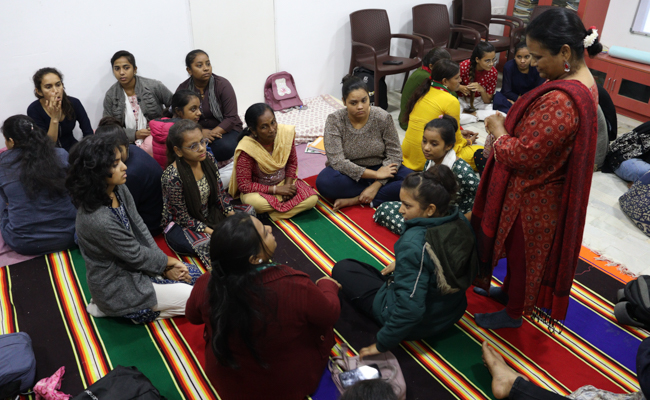
Experiences such as the Srujan pre-cooperative, formed by urban young women, highlight both the possibilities and tensions in engaging a new generation. While younger women bring different aspirations and skills, pathways into cooperative structures are often unclear.

At the same time, expectations around participation, responsibility, and leadership are not always aligned across generations—making it difficult to sustain continuity.

Our Approach

The focus is on how cooperative institutions can remain open to generational change. This includes supporting leadership transitions, creating spaces for mentorship, and enabling younger women to engage with governance and decision-making.

Rather than introducing fixed models, the work draws from ongoing experiences such as Srujan to understand how these pathways can evolve across different contexts.

Insights from the Srujan initiative on engaging young women in cooperative models.

This site is registered on wpml.org as a development site. Switch to a production site key to remove this banner.