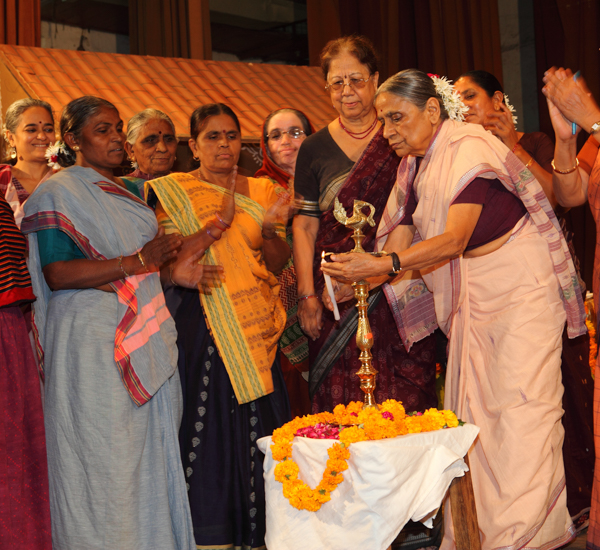
The Gujarat State Women’s SEWA Cooperative Federation emerged from SEWA’s dual strategy of organising informal women workers through unions and building their own economic institutions through cooperatives.
Since SEWA’s founding in 1972 as a trade union of self-employed women, this dual strategy has worked towards full employment and self-reliance, what Gandhiji described as “Doosri Azadi” (second freedom), rooted in dignity, work, and economic independence.
As women across trades began forming cooperatives, it became clear that while each enterprise was rooted in its own context, they faced common challenges around management, finance, and market access.
In April 1992, over 900 women leaders from SEWA cooperatives came together in Ahmedabad to present these concerns and call for a collective institution that could support and strengthen their enterprises.
On 31 December 1992, the Gujarat State Women’s SEWA Cooperative Federation was established bringing these cooperatives together under a shared institutional framework.