Preface
India is home to 10.96 crore non-agricultural informal workers employed across 6,50,48,400 unincorporated enterprises in manufacturing, trade, and other services. These workers generally perform home-based work or are engaged in informal producers’ cooperatives. Women make up 26 percent of this workforce. Workplaces in the unorganised sector are often located in informal or low-income settlements that fall between the cracks of urban development planning. This leaves them vulnerable to challenges posed by urban infrastructure deficits pertaining to basic services of sanitation, transportation, electricity and waste management. These vulnerabilities are exacerbated during extreme weather events such as extreme heat or excess rainfall.
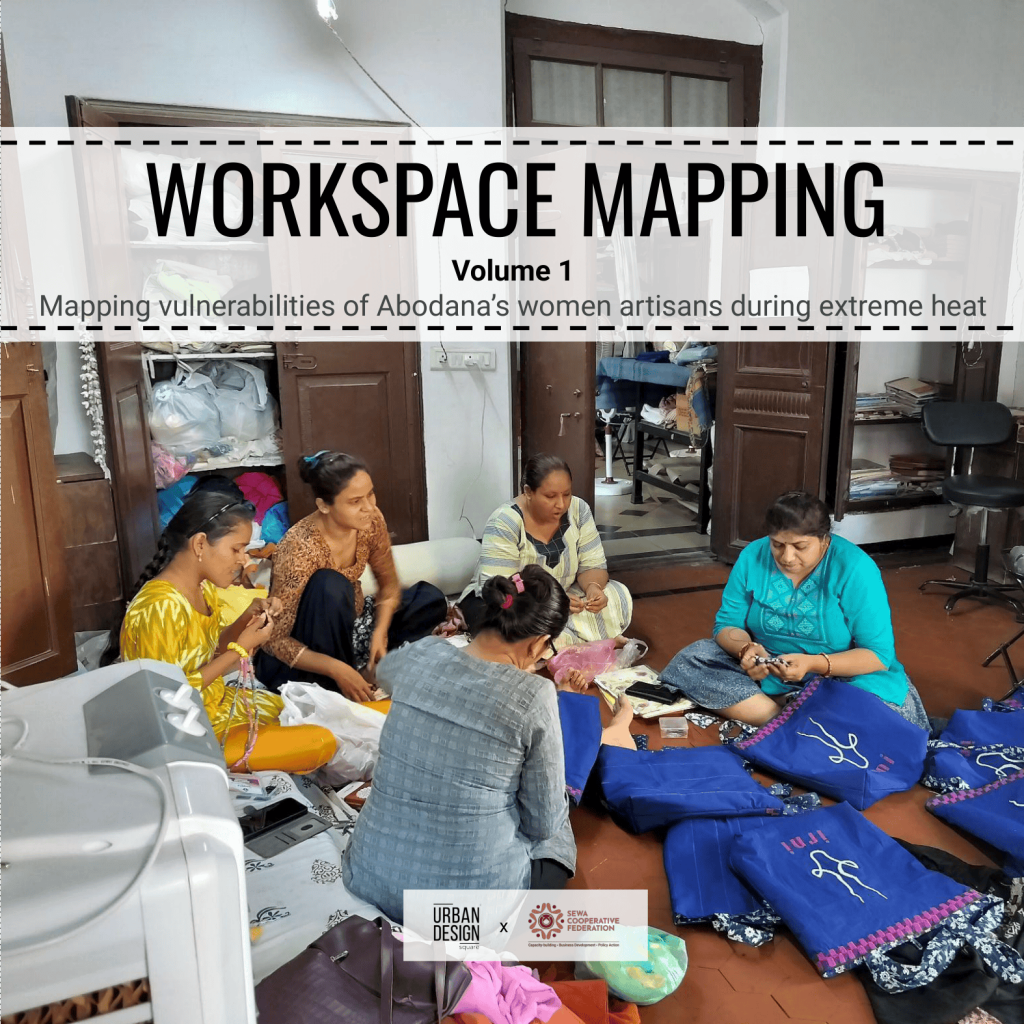
The state of Gujarat in western India is ranked among the top fifty regions in the world that are most ‘at risk’ from climate hazards. Ahmedabad district in particular has seen consistent increase in the duration and intensity of heat waves over the last three decades, and is projected to see a fivefold increase by the 2030s. Gujarat is also a hub for handicraft workers and Ahmedabad city has multiple clusters of informal home-based handicraft workers. This study is part of an ongoing effort to understand and unpack how climate change, experienced as extreme weather events such as heat waves and excess rainfall, impacts the operations and work of these informal women handicraft workers.